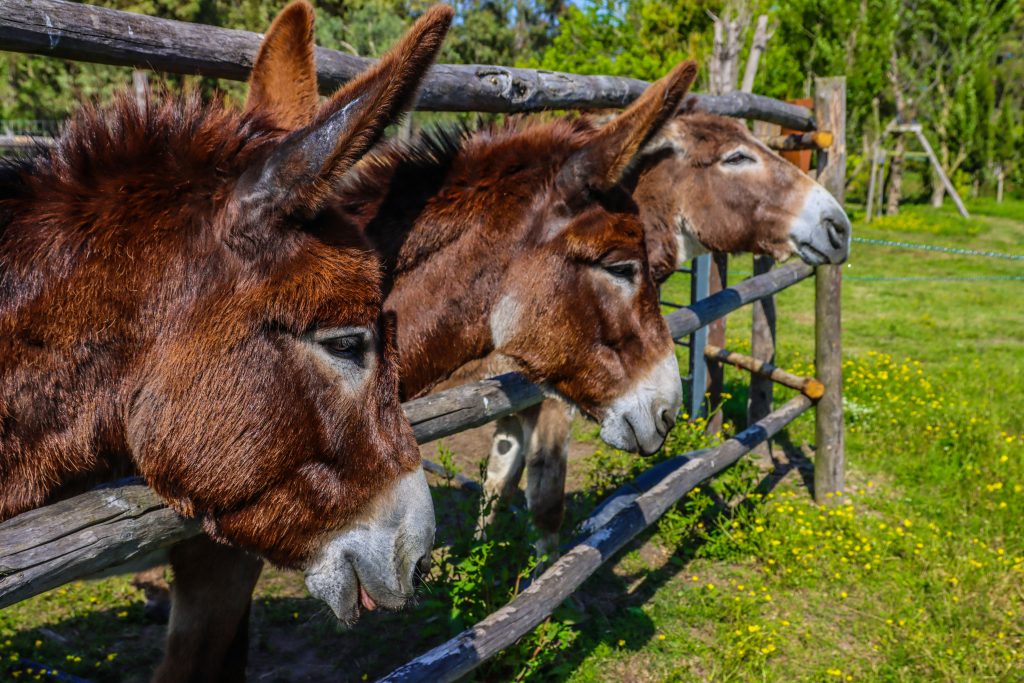
Treatment and advice
Practical tips for caring for donkeys
Power supply
Practical directions for proper donkey feeding.
Shelter
All the features of the ideal donkey barn.
Fence
Alternatives to different types of fencing for keeping donkeys.
power supply
How to feed a donkey
Donkeys have adapted to a diet rich in fiber, as they are native to lands where vegetation is dry and sparse.
A medium-sized (160 kg) and healthy adult donkey requires 2-3 kg of food per day consisting solely of straw, hay or restricted pasture, plus a licking block or balancer of vitamins and minerals.
Straw should make up 75 percent of the total feed intake during the summer months and 50 percent in the winter, with the addition of hay or restricted pasture to reach the total.
Only some donkeys require extra feed, for example, older donkeys, underweight donkeys, young donkeys, pregnant or lactating females, and donkeys with dental problems.
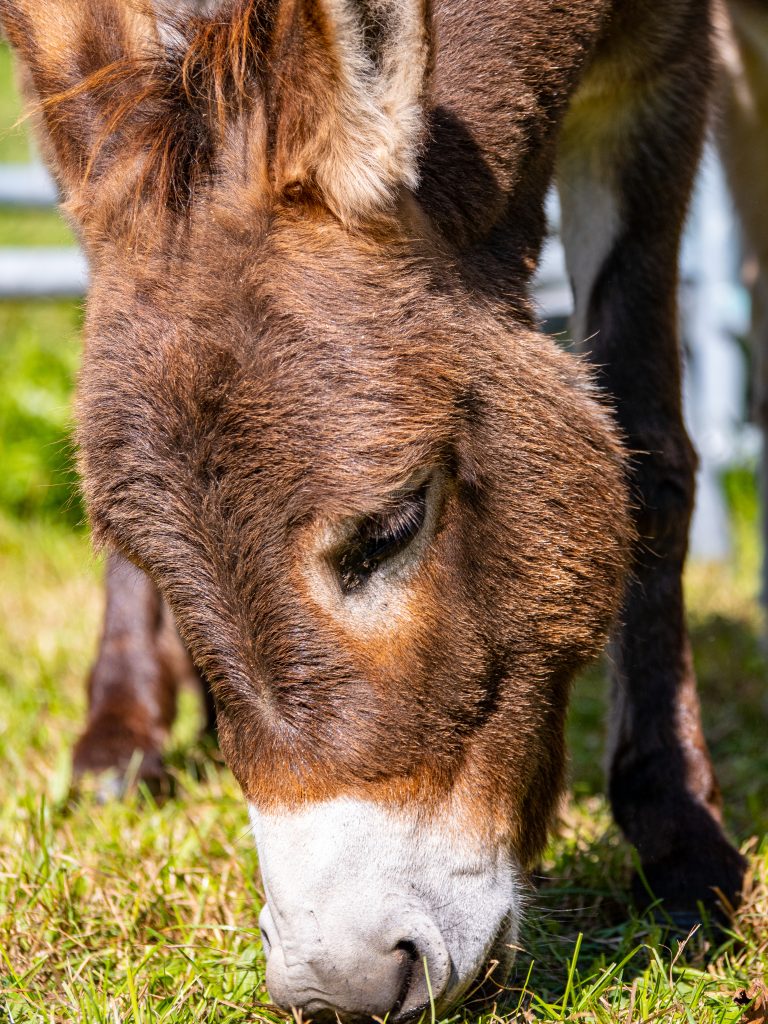
shelter
Characteristics of a barn
The donkey barn or shelter should provide an area to avoid heat and insects during summer and shelter against bad weather in winter.
There are numerous points that must be taken into consideration when designing a donkey barn:
1. A suitable barn should always be accessible, to provide protection during winter, but also shade in summer.
2. There is a wide range of barns and shelters available on the market or you may already have one that is suitable, or could become one by making some modifications.
3. Provide about 4.5 square meters of covered area for each donkey.
It is essential that the bottom be well drained, hard and non-slippery.
Such as concrete.
4. Provide a draining concrete floor for them to get out if the pasture is not usable in winter.
5. Ensure that the barn is adequately ventilated
6. Protect glass windows with netting.
7. Provide a good supply of clean, potable water.
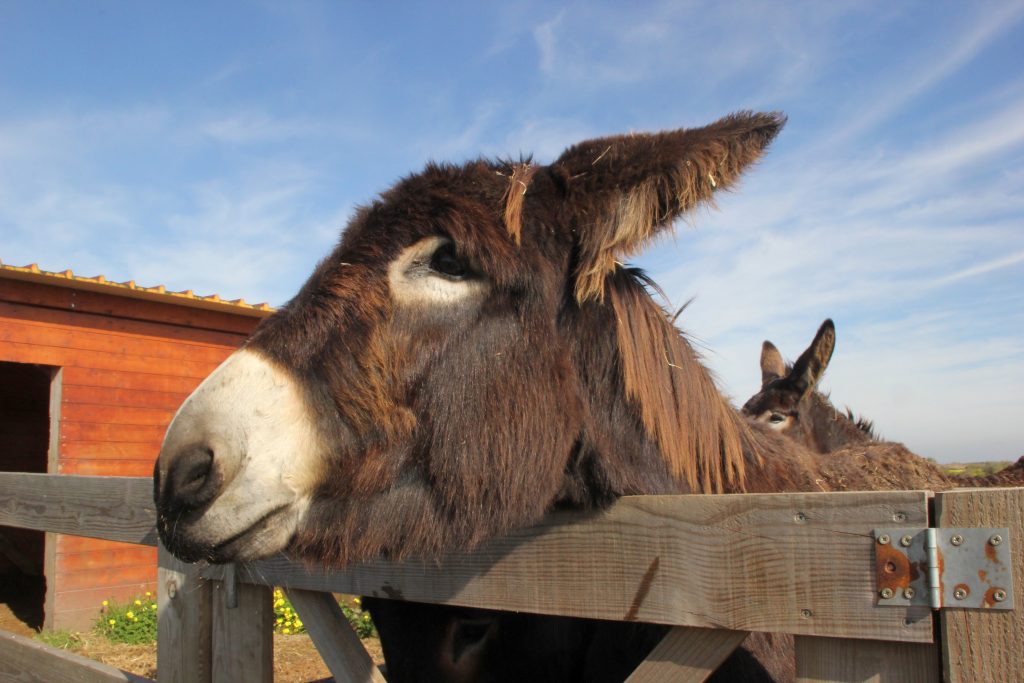
fence
Different fences for different needs
There are many alternative types of fences, or combinations of fences, that can be used to contain donkeys.
Wooden poles joined by a net for equines, pigs and sheep are a cheaper alternative.
Electric fence: this is a versatile and effective method of pasture management.
Electric fencing can be used to create fences within other fences or to create grazing strips.
Whenever possible, the field should be divided into two or three corrals to allow better control of the food available for the donkeys and easier grazing management.
Fences should allow donkeys free access to the barn or place of shelter and fresh water.